Tuesday, 10 April 2012

Need to Manage Risk


The problem of preparing for a natural disaster is not a new one.
Around the world and particularly in the more-developed countries,
governments, individuals and corporations know they should prepare for a
“big earthquake” or a “large hurricane” or an “extensive flood.” Yet, they
often do not take the necessary steps to prepare for a disaster. Only after a
disaster occurs do they recognize the importance of preparing for these types
of extreme events.
A major earthquake or hurricane can result in loss of life and serious
damage to buildings and their contents. Bridges and roads can be damaged
and closed for repair over long periods of time. Disaster victims may need to
be relocated to temporary shelters or reside with friends or relatives for days
or weeks. Businesses may have their activities interrupted due to facility
damage or lack of utility service. For some businesses, this may result in
insolvency. In August and September 2004, these challenges were obvious
when Florida and other states as far north as New Jersey and Pennsylvania
were deluged by Hurricanes Charley, Frances, Ivan, and Jeanne.
The need to prepare for these types of extreme events is evident when
evaluating the economic consequences of natural disasters.
A great natural catastrophe is defined as one
where the affected region is “distinctly overtaxed, making interregional or
international assistance necessary. This is usually the case when thousands of
people are killed, hundreds of thousands are made homeless, or when a
country suffers substantial economic losses, depending on the economic
circumstances generally prevailing in that country”
the amplitude of the
peaks seems to be increasing over time. This trend is expected to continue as
higher concentrations of population and built environment develop in areas
susceptible to natural hazards worldwide. Additionally, worldwide losses
during the 1990’s exceeded $40 billion dollars each year with the exception of
1997. Losses were as high as $170 billion in 1995, primarily due to the largescale
earthquake that destroyed portions of Kobe in Japan in January of that
year. Insured losses matched this growth during the same timeframe.
The volatility and trend in losses can be seen in the United States as
well.
U.S. catastrophes are deemed significant when
there is an adjusted economic loss of at least $1 billion and/or over 50 deaths
attributed to the event (American Re, 2002).
There are peaks in losses due to catastrophic events, as in worldwide
losses (most prominently in 1989, 1992, and 1994), and the upward trend over
the past 50 years is evident when broken down by decade,
. The losses from individual disasters during the past 15 years are an
order of magnitude above what they were over the previous 35 years.
Furthermore, prior to Hurricane Hugo in 1989, the insurance industry in the
United States had never suffered a loss of over $1 billion from a single
disaster. Since 1989, numerous disasters have exceeded $1 billion in insured
losses. Hurricane Andrew devastated the coastal areas of southern Florida in
August 1992, as well as damaging parts of south-central Louisiana causing
$15.5 billion in insured losses. Similarly, on the west coast of the United
States, insured losses from the Northridge earthquake of January 1994
amounted to $12.5 billion.
Residential and commercial development along coastlines and areas
with high seismic hazard indicate that the potential for large insured losses in
the future is substantial. The ten largest insured property losses in the United
States, including the loss from 9/11, The increasing trend for
catastrophe losses over the last two decades provides compelling evidence for
the need to manage risks both on a national, as well as on a global scale.


Private Sector Stakeholders in the Management of Risk
The magnitude of economic and insured losses from natural disasters
raises various questions. Who are the individuals affected by these events?
What options are available to them to assess their risk? What factors influence
their choices for dealing with these risks and actively managing their risk? By
examining the perspectives of these individuals and groups, one can develop
more effective risk management strategies for reducing potential losses from
such disasters.
Each of the stakeholders’ goals and perceptions of the risk lead them to view natural hazards from a unique perspective.At the bottom of the pyramid are the property owners who are the
primary victims of losses from natural disasters. They have to bear the brunt
of the losses unless they take steps to protect themselves by mitigating or
transferring some of the risk. Insurers form the next layer of the pyramid.
They offer coverage to property owners against losses from natural disasters.
Insurers themselves are concerned with the possibility of large claim
payments from a catastrophe and turn to reinsurers, the next layer of the
pyramid, to transfer some of their risk. At the top of the pyramid are the
capital markets, which in recent years have provided financial protection to
both insurers and reinsurers through financial instruments, such as catastrophe
bonds. Of course, there are exceptions to this pyramid structure. For example,
there have been two catastrophe bond issues (Concentric Re, covering Tokyo
Disneyland, and Studio Re, covering Universal Studios) that offered direct
protection to these property owners in place of traditional insurance
arrangements.

Friday, 6 April 2012

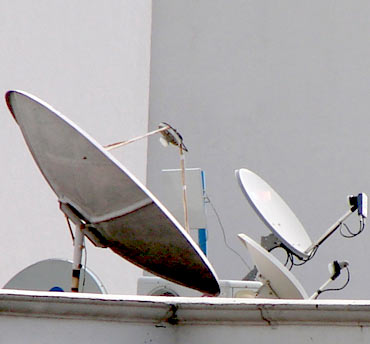
A case study on DTH in the Time of Recession


‘Economic recession’ has been the biggest buzz word in the recent times. But we see
opportunity in the present economic slowdown instead of looking it as a hurdle for a
new venture. As history is the living proof of the same. Google, CNN, GE to name a
few, all started during the worst times and made it big. In present time Pink slips and
job insecurities are covering the globe so this means the talent is much easier to trap,
real estate is cheap. The entertainment industry was the only boom during the 1930’s
recession, as more people turned to television viewing in order to distract them from the
prevalent gloom. This adds more confidence in us to hit the DTH market, with the Govt
pushing Conditional Access System (CAS) hard on cable operators. Here our main
motto is to avail quality entertainment by DTH to a major part of our people in an
affordable price. We want to make avail our service from a millionaire to a common
man in rural areas.
The existing DTH players like BIZ-TV and Infotainment Communication are using
different spectrum on Ku band but offer pretty much the same set of channels(assuming
that every company is doing same in india ) . so we think they are wasting their
money and people money. For an example … ..the Govt. has made it mandatory to
include Doordarshan(DD) channels for service providers like BIZ and its
contemporaries. In the distribution process signal of DD even comes atleast 3 times in
Cband and 2 times in HITS hence totals 11 times, which amounts to wastage of
bandwidth and hence loss of public money. So sharing of the spectrum or beam could
be a solution.
A shared beam can be used by different operators using a standard set top box with
different codes, or ID cards that would identify the operator, recently a similar view
publicly shared by Dr Nair, chairman ISRO. This technology is already in use in UK
and Australia where a single beam is being shared by 5 venders , without affecting the
picture quality. Therefore by sharing of infrastructure and satellite we would limit our
initial expenditure and save public money to a greater extent. The seed money for a
DTH venture is about 400 cr but we can reduce it to 275crore or can even less than this
by sharing infrastructure .Our main plan at present is to seek common agreement on
standardized set top box and infrastructure sharing with any current DTH players. This
would certainly require changes in (addition of more LNBs ) existing customer-dish of
a vender, from which we will share infrastructure , so companies with large no of
customer will hesitate to our proposal. Hence our approach to the present DTH biggies
like BIZ and Info Comm. is completely ruled out. We clearly intent to target the DTH
players who are new in the business or planning to jump into DTH field. They have
few customers and can make the changes needed in their customer’s set top box.
In the present time DVI technology is the best way to receive video into a LCD TV
however no setup box(STB) in the current market offers the same . So in essence the
cheap STBs from genuine DTH service provider make the digital MPEG2/4 signal
convert to analogue to transmit to the TV, where it converts back digital, leading to a
generation loss. Keeping in view the high customer expectations we plan to launch DVI
enabled STBs along with genuine STBs for the common people. We even plan to install
larger dish and automatic level control system in heavy rain fall prone areas to account
for the complains against signal disruption during rain. Other than this We will be
having all the present technology available in market .
“The winning strategy in the DTH space?” We believe cost leadership is not the
answer. Providing cheaper set-top boxes will not do. the ans we think is reach out and
make the service affordable to a very large section of Indians. So we will look at being
present at places where anybody can get us, be it the grocer or paanwala. After some
research on current market we got that a general person is un known about the fact
about DTH and having the wrong idea about the DTH service is that it is very costly.
So to tackle this we will try to captre the whole market through a chain system. We will
open our centers in major parts of country and then quickly walk out through the whole
country. As In the DTH industry, a credible and well managed first-mover service has a
tremendous advantage over others. In India, a first mover may effectively shut out
competition. From our centers we will organize entertainment shows in different places
through that we will give people idea aboutour service , we will be going to schools to
promot our study pakage ,to tv showrooms even to home . The challenge for cable
exists in the rural areas where installation and application are extremely cost
prohibitive, and nearly three quarters of India is designated as rural territory. This has
created an opportunity for DTH, which serves an immediate threat to the high-end cable
networks. we will look at being present at places where anybody can get us, be it the
grocer or paanwala. In a bid totap rural markets, we will look for potential partnerships
with echaupals , post offices and even fertilizer companies.
Our customers will be our sharukh khan, kajol . we will promote our product through
our customer .if he/she get us a new customer, then we will provide them gift in terms of
our service. We will not going to get a celebrity for our advertisement keeping view on
liquidity trap. We will give simple advertisements in, radio, newspaperand privet
channels including DD. Because there are lot of people in India who do not have cable
connection for example in rural and remote areas. Overall we do not think that people use
the product which a celebrity shows, rather they will be motivated by a person who is
satisfied that product.We will have a cost management board that will manage cost of our
infrastructure and prosess looking at this recession .
Service is not yet satisfactory from exiting DTH players, we get this from current market
research. When we talked to people we found that one of the fears is that once they invest
their money in any of these DTH services, they will be forced to be with that service
forever due to the invested money in set top box(STB). So we thought of an idea to give
our customer freedom from the STBs.we will return our STBs and pay the money back
depending on condition of (STBs) if they are not satisfied with our service. We
will create a set of trained professionals in DTH hardware servicing to support our
distribution , post-sales services, installation and activation teams. As we have invested
less in infrastructure so we will be able to give our customers services in very effordable
price it will be starting from 70 /-.There is a huge demand from customer side customized
tv programe, so we will make them avail any program they want . The main thing that
pushes growth is choice. People like options. So we will try to cover evry possible
channel. There is a regular complain of changing of rules and price of service against
existing players so we will assure people of long term policy and will do it too.for
attracting rural people we will avail them specia l regional channel pakage at attractive
price .there will be a commity for checking services given by our centers they will record
the phone talk between customer and employee . and will be donning the guise of
common customer to investicate on regular basic for perfect service
Concluding we have a bunch of ideas and capability to implement them to make our
company the top and we will make that . Thank you

Monday, 2 April 2012

HEDGE FUND MYTHS


As mentioned earlier, the public perceives hedge funds as risky investments
appropriate for thrill-seeking investors. This myth and others persist despite
evidence to the contrary.
Hedge funds are sometimes called absolute return strategies. The
idea of absolute return is in contrast to traditional money management,
where returns are compared to a benchmark of returns on similar assets.
The return on a portfolio of stocks is compared to the S&P 500 or other
index, and a manager is judged not on whether the portfolio was profitable
but rather on how the portfolio return compared to the market return.
In contrast, absolute return strategies can be expected to be
profitable regardless of what happens to any identifiable index. In theory,
the absolute return manager would be judged only on the size and
consistency of returns.
However, most hedge funds retain at least some correlation to stock
and bond returns. Academic studies have shown that the returns on
hedge funds can at least in part be explained by market returns and
other economic factors (credit spreads, volatility, and others). Further,
for hedge funds that follow a popular strategy, it is possible to benchmark
an individual fund’s return against peer fund returns. Finally,
hedge fund indexes now exist that provide reasonable benchmarks for
many hedge funds.
Another hedge fund myth involves assumptions about the life cycle of
hedge funds. Many investors refuse to invest in hedge funds that have less
than, for example, two years of performance in the belief that young funds
are more likely to fail. Other investors seek to invest in young funds because
they believe that smaller, newer hedge funds provide higher returns
than large funds that have been in existence for many years. In addition,
there is a belief that hedge funds don’t tend to survive longer than about
eight years.

In fact, many factors affect the riskiness of hedge funds, the return to
particular funds, and the popularity of an investment style. Certain strategies
such as convertible bond arbitrage remain attractive, despite existing
for decades. The early demise of many new hedge funds can be explained
by weaknesses in investment strategy, failure to establish systems and operating
procedures, or simply bad timing for a fund of a particular style or
strategy.

HEDGE FUND BASICS


Many investors are unfamiliar with the way a hedge fund investment behaves.
In addition to having more investment latitude than traditional investment
managers, a hedge fund manager may charge a variety of fees and
place restrictions on exit from a hedge fund.
Fees
Hedge funds charge a variety of fees. Other types of investment pools, including
mutual funds, private equity funds, and real estate investment
trusts, charge the same types of fees, but the structures of the fees may differ
slightly in the hedge fund industry.
A management fee is charged as a flat percentage of assets under management.
Hedge funds generally charge an annual management fee between
1 and 2 percent. For example, if a fund charges 1.5 percent, it might
assess a monthly fee equal to .125 percent (1.5%/12) based on the value of
the fund’s capital at month-end. This fee is charged regardless of whether
the fund has been profitable. Some funds calculate the management fee
quarterly or less frequently.
An incentive fee is based on the profits made by the hedge fund.
Hedge funds generally charge 15 percent to 25 percent of profit as an incentive
fee. Suppose a fund makes 2 percent or $2 million on assets of
$100 million in a particular month before incentive fees but after the
management fee has been deducted. If the fund collects a 20 percent incentive
fee, the fund will pay $400,000 ($2 million × 20%) to the management
company.
Funds usually charge no incentive fee on profits that offset prior losses.
This is called a high-water mark provision. For example, suppose a hedge
fund started with a net asset value (NAV) of $1,000. Over several months,
the NAV rose to $1,500 and the management company charged incentive
fees based on this return. If the NAV declined to $1,400, the manager
would refund no incentive fees, but the fund would pay no incentive fees
on any returns until the value to investors rose above the previous highwater
mark of $1,500.
Sometimes a fund pays incentive fees on returns above a certain minimum
return. Suppose a $100 million hedge fund pays a 20 percent incentive
fee on returns above the London Interbank Offered Rate (LIBOR). If
LIBOR was 3 percent (annualized to 3%/12 or .25% for a month) and
the fund return was 3.5 percent in one month, the fund would collect an
incentive fee on 3.25 percent; thus, $100 million × (3.5% – .25%) ×
20% = $650,000.
A fund may subject previously paid incentive fees to a look-back provision.
In this case, a manager may be required to refund incentive fees
back to the fund if the fund experiences a loss shortly after an incentive
fee is paid. Look-back provisions are not common, and the specific provisions
can vary from fund to fund. For example, one fund limits the lookback
to three months. Another fund limits the incentive fee look-back to a
calendar quarter.
Hedge fund managers may charge other fees, such as commissions, financing
charges, and ticket charges. The management company may keep
some or all of these fees or may pay out part of these fees as sales incentives
to individuals who market the hedge fund to investors. The existence
and the magnitude of these fees vary from fund to fund. The fund should
disclose these fees to investors, but investors may nevertheless have trouble
determining how much these fees affect the return of the fund.

Thursday, 29 March 2012

DEFINITION OF HEDGE FUND

Definitions of hedge funds run into problems because it is exceedingly difficult
to describe what a hedge fund is without running into trouble with
funds that don’t fit into the rules. There are investment pools that closely
resemble hedge funds but are generally regarded as a different type of investment.
Still other types of investments may contain characteristics that
are generally associated with hedge funds.
As a starting point, begin with a rather typical definition of a hedge
fund:
A hedge fund is a loosely regulated investment company that charges
incentive fees and usually seeks to generate returns that are not highly
correlated to returns on stocks and bonds.
Many traits of hedge funds aren’t useful in defining what is and what is not
a hedge fund.


Regulation and Hedge Funds
Chapter 8 describes the laws and regulations that control hedge funds.
While hedge funds are not unregulated, as is sometimes asserted, they are
more loosely regulated than mutual funds and common trusts run by bank
trust departments. Other types of investments are also loosely regulated,
though, including private equity partnerships, venture capital funds, and
many real estate partnerships.
Investors may feel they will “know it (a hedge fund) when they see it,”
but there are no firm lines separating hedge funds from these other types of
investments. Hedge funds may invest part of their assets in private equity,
venture capital, or real estate.
To further blur the distinction between hedge funds and regulated investment
companies, there is increasing pressure from the Securities and
Exchange Commission (SEC), bank regulators, auditors, and exchanges
for hedge funds to disclose more information and to control permitted
activities. Hedge funds may soon be required to disclose much of the information
that mutual fund companies must report. The SEC has proposed
to require all hedge fund management companies to register as
investment advisers.

Limited Liability
Sometimes, the definition of hedge funds mentions that hedge funds are a
vehicle where investors have no liability for losses beyond their initial investment.
It certainly is true that most hedge funds in the United States are
organized as limited partnerships or limited liability corporations (see
Chapter 5) that protect the investor from liability. However, offshore funds
are usually organized as corporations and, despite this difference, also create
a limited liability investment.
Most other investments are also limited liability investments. Investors
can lose no more than 100 percent of the value of long positions in stocks
and bonds. Mutual funds also protect the investor from losses in excess of
the amount of money invested. While accurate for hedge funds, the characteristic
of limited liability does little to define hedge funds.

Flow-Through Tax Treatment
Hedge funds are not taxed like corporations. Instead, all the income, expenses,
gains, and losses are passed through to investors. This feature does
not define hedge funds because many other investment types are flowthrough
tax entities. Real estate investment trusts (REITs), mutual funds,
venture capital funds, and other private equity funds are regularly constructed
to receive flow-through tax treatment.
Hedge funds organized outside the United States are frequently organized
in locations that have little or no business tax. In these locations,
hedge funds are not organized to get flow-through tax treatment.
Instead, these funds are organized as corporations that do not require
investors to include the annual hedge fund income and expenses on investor
tax returns.

Tuesday, 27 March 2012

“intelligent” investor?


Now let’s answer a vitally important question. What exactly does Graham
mean by an “intelligent” investor? Back in the first edition of this
book, Graham defines the term—and he makes it clear that this kind of
intelligence has nothing to do with IQ or SAT scores. It simply means
being patient, disciplined, and eager to learn; you must also be able to
harness your emotions and think for yourself. This kind of intelligence,
explains Graham, “is a trait more of the character than of the brain.” 2
There’s proof that high IQ and higher education are not enough to
make an investor intelligent. In 1998, Long-Term Capital Management
L.P., a hedge fund run by a battalion of mathematicians, computer
scientists, and two Nobel Prize–winning economists, lost more than
$2 billion in a matter of weeks on a huge bet that the bond market
would return to “normal.” But the bond market kept right on becoming
more and more abnormal—and LTCM had borrowed so much money
that its collapse nearly capsized the global financial system.3
And back in the spring of 1720, Sir Isaac Newton owned shares in
the South Sea Company, the hottest stock in England. Sensing that
the market was getting out of hand, the great physicist muttered that
he “could calculate the motions of the heavenly bodies, but not the
madness of the people.” Newton dumped his South Sea shares, pocketing
a 100% profit totaling £7,000. But just months later, swept up in
the wild enthusiasm of the market, Newton jumped back in at a much
higher price—and lost £20,000 (or more than $3 million in today’s
money). For the rest of his life, he forbade anyone to speak the words
“South Sea” in his presence.
Sir Isaac Newton was one of the most intelligent people who ever
lived, as most of us would define intelligence. But, in Graham’s terms,
Newton was far from an intelligent investor. By letting the roar of the
crowd override his own judgment, the world’s greatest scientist acted
like a fool.
In short, if you’ve failed at investing so far, it’s not because you’re
stupid. It’s because, like Sir Isaac Newton, you haven’t developed the
emotional discipline that successful investing requires. In Chapter 8,
Graham describes how to enhance your intelligence by harnessing
your emotions and refusing to stoop to the market’s level of irrationality.
There you can master his lesson that being an intelligent investor is
more a matter of “character” than “brain.”


Credit Risk Management


Assume a major building
company is asking its house bank for a loan in the size of ten billion
Euro. Somewhere in the bank’s credit department a senior analyst has
the difficult job to decide if the loan will be given to the customer or
if the credit request will be rejected. Let us further assume that the
analyst knows that the bank’s chief credit officer has known the chief
executive officer of the building company for many years, and to make
things even worse, the credit analyst knows from recent default studies
that the building industry is under hard pressure and that the bankinternal
rating1 of this particular building company is just on the way
down to a low subinvestment grade.
What should the analyst do? Well, the most natural answer would
be that the analyst should reject the deal based on the information
she or he has about the company and the current market situation. An
alternative would be to grant the loan to the customer but to insure the
loss potentially arising from the engagement by means of some credit
risk management instrument (e.g., a so-called credit derivative).
Admittedly, we intentionally exaggerated in our description, but situations
like the one just constructed happen from time to time and it
is never easy for a credit officer to make a decision under such difficult
circumstances. A brief look at any typical banking portfolio will be sufficient
to convince people that defaulting obligors belong to the daily
business of banking the same way as credit applications or ATM machines.
Banks therefore started to think about ways of loan insurance
many years ago, and the insurance paradigm will now directly lead us
to the first central building block credit risk management.


Situations as the one described in the introduction suggest the need
of a loss protection in terms of an insurance, as one knows it from car or
health insurances. Moreover, history shows that even good customers
have a potential to default on their financial obligations, such that an
insurance for not only the critical but all loans in the bank’s credit
portfolio makes much sense.


Monday, 26 March 2012

Trade can help the poor


If South Asia, Africa, East Asia, and Latin America increased their share of world exports by 1 per cent each, the resulting gains in income could lift 128 million people out of poverty, says a report by development agency Oxfam. Barbara Stocking, director, Oxfam, was in India recently to promote its 'Make Trade Fair' campaign. She explained to Vikas Singh and Rahul Shivshankar why it is vital that developing countries continue to seek greater market access:
Why has an agency better known for humanitarian work taken up the issue of fair trade?
Oxfam has a long history of campaigning and advocacy. Remember, it was set up during World War II to ensure that ordinary people did not suffer from famine in a war situation. We're also a development agency. Almost half our funding goes into tackling development issues in 80 poor countries. The reason for this trade campaign is that you can't just work on the ground, you also have to change policy at the national and international level, to really make a difference to the lives of poor people.
Aren't you worried that your report may end up encouraging anti-trade campaigners?
Let me make it clear, we believe trade can help poor people. Unfair trading rules may be hindering that right now, but that doesn't mean there's anything wrong with trade. Equally, globalisation is a reality. There may be some people who talk about opting out, but that's unrealistic. You really have to see how to make the system work better.It would be nice if everything was open and fair, but it's not like that in the real world. There are imbalances in all sorts of power relations and rules and regulations, and we have to try and switch those a bit.
What kind of reforms would you like to see at the World Trade Organisation?
We are really concerned that the processes at the WTO become much more transparent. Developing countries are working on capacity-building, but we are not sure they understand the implications of everything they are signing up for. We will work right through the next round of negotiations to ensure that it lives up to its billing of being a 'development round'. For example, we will be pushing for scrapping - or at least reduction - of agricultural subsidies in the north, and the issue of compulsory licensing in countries where people can't produce their own generic drugs.Activists favour labour standards; developing countries see them as a trade barrier.
Where does Oxfam stand?
We are pressing companies to do the right thing. A number of big companies say they don't allow poor working conditions or sexual harassment at their own workplaces, but can't check what's happening down the supply chain. We tell them that if corporates press down very hard on the prices they pay suppliers, the local factory owners in turn will squeeze their employees, making it worse for the workers. So, it's really up to corporates to pay a fair price for what they are getting. It's in their own interest to do so. Because internationally, it's not considered very respectable to be associated with such practices. Above all else, consumer pressure works. More and more consumers across the world don't want to be associated with firms that use sweatshops, and we're going to keep adding to that pressure.
Aren't you preaching to the converted in India about fair trade? What is Oxfam doing in the United States, where steel import curbs have been imposed?
I agree we've really got to get some movement in the US and the European Union, and we need to work on them to change their position. But we can only get change if, around the world, a lot of people show that they are really concerned about the way trade rules work. We've got to get people mobilised, which is why we've put the campaign on the Web. We have some confidence that we can actually achieve change, because we saw it in the case of the campaign to reduce debt for developing countries. We saw mass mobilisation, and governments recognised that their people didn't like what was going on. Of course, it doesn't happen overnight. We have to keep pushing.This particular campaign is aimed for the next three years, and we'll be focusing on specific issues like commodity prices and labour rights, particularly female labour rights. But that doesn't mean we haven't been campaigning on such issues before. For example, our campaign on the cost of drugs was obviously linked up to the patents issue, and came well before the free trade campaign. You're urging governments to embrace free trade.
But how about also telling them to simultaneously create social safety nets and improve infrastructure?
Certainly, trade on its own will not get rid of poverty completely. You have to work on education and basic infrastructure like electricity, water and roads. One of the problems I've been hearing about during my visit here is the high amount of taxation at state borders. If you're trying to encourage producers, then you could at least open your own markets a little more.One of my reasons for coming here was to talk with some ministers. I had a very good dialogue with your commerce minister, Murasoli Maran, and health minister C P Thakur. From my perspective, it was very helpful to talk about the WTO processes as the Indian government saw them. We didn't have deep conversations about internal Indian policies, because I don't know enough, and it would be very arrogant of me to come in for a few days and get into this area. But it could be something we could take up with our staff in India, and they can discuss some of the areas we might like to focus on.
What's Oxfam's reaction to Gujarat?
Oxfam stands for all people being equal and having basic human, economic and social rights. It's dreadfully sad to see a country that has historically had a good experience over thousands of years, of different communities and religions living together, starting to come apart. Did you raise the issue with the Indian government?No, I don't feel I know enough details. We are doing relief work in the refugee camps in Gujarat. But we are not going to get into who is right or wrong. What we are looking at is how ordinary people are affected. As I understand it, the UK government is very concerned about the situation. But we are not going to get into the middle of a debate between two governments. That is really not our business. We will do humanitarian work on the ground in Gujarat, and we will look at long-term peace-building there

Managing a Company in Today’s Business Environment


As business gets more competitive, more global, more technologically
driven, it gets easier for others to compete with you. It
gets harder to be successful by just doing OK. It gets harder to
launch a good product and enjoy the benefits of your innovation
for a long time without serious competition. And, yes, it does get
tougher to make a living. So what was good enough for our parents
to be able to get by and make a “good living” isn’t good
enough today. You may have read that many of us will fail to
achieve the relative standard of living that our parents did
because of that tougher world out there. Of course, if you’vebeen alive for the past 10 or 15 years, you also know that there
are unprecedented opportunities to create new wealth, new
products, new companies, and new fortunes that never before
existed. It’s unlikely that our forefathers could have imagined fortunes
being made, and lost, as quickly as they were in the ’90s.
So it’s hard to argue that times are more challenging now.
The question is: what can you do about it? The answer: not
much about the times, but a lot about how you prepare for
them. And that’s what this book is all about.
When I was a young boy, my father owned and ran a small
grocery store that supplied the neighbors with their daily household
needs, long before supermarkets killed the mom-and-pops
that then existed in every neighborhood. When school was over,
I went to the store to help out, because mom and dad were both
working there. My first job was opening cases of packaged
goods, pricing the packages, and stocking the shelves. Then I
packed groceries and delivered them to customers, sometimes
after taking their order over the phone and personally filling it.
(Yes, that was how many small stores did business back then.)
Then I graduated to cutting meat in the fresh meat department.
By the time I was in junior high school, I was checking out customers,
opening the store in the morning, and finally running
the store when my parents went on a rare vacation. By the time
I was in high school, I had run every aspect of a small business,
including opening and closing the cash register and doing the
bookkeeping at the end of the day.
In today’s business terms, I had worked in shipping/receiving,
warehousing and inventory control, production, sales, delivery,
billing and collection, accounting, and management.
Uncommon today? Yes, and yet that diverse background is
exactly what is being demanded more and more of today’s upand-
coming professionals. Managers in companies large and
small, including directors, vice presidents, and general managers,
are finding their particular specialties aren’t going to
carry them to the finish line as they might once have.
Their first clue might have been the arrival of the personal

computer. Senior managers and company executives a generation
ago were challenged by their lack of knowledge of this new
tool, no matter how firmly they knew their own particular areas
of expertise. The young professionals coming into the business
often made their bosses look old-fashioned with their mastery of
this impressive and intimidating technology. Soon, as we discovered,
those young professionals had children, whose computer
acumen after being on the planet for only a few years made
even their savvy parents sit up and take notice. And so it goes.
Now, as we are learning, finance and accounting are having
an impact on many companies in ways never before thought of
by managers outside the financial department. The accounting
scandals of 2002 showed that financial incompetence, or carelessness,
or simply lack of integrity, could wipe out the efforts of
thousands of loyal, hard-working employees. The report card, it
seems, has become more important than it ever was when we
were in school.
Today we’re finding out that we need to know how to read a
report card so we can just keep our jobs, let alone advance in our
careers. Boards of directors now need to delve into the reports
they have routinely received for years to a degree never before
contemplated. They need to understand financial terminology and
accounting methods they might previously have taken for granted.
CEOs now need to be completely aware of what their people
are doing and the financial ramifications, because they will no
longer be able to credibly say they didn’t know. And finally, managers
within a company, whether large or small, are going to
need to understand the rules of accounting and the boundaries of
proper finance well enough to avoid getting into trouble just
because they were aggressively trying to make their goals. As for
those who aspire to become managers, they might not even get
started up the ladder until they can demonstrate this kind of
knowledge. So you see, it touches everyone.
Now, it’s all well and good to say that accounting scandals
will make everyone learn more about finance and accounting,
but is that the only reason to know this stuff? Of course not!

Wednesday, 11 May 2011

Home Loan

 What is a Loan?

A loan is a type of debt. Like all debt instruments, a loan entails the redistribution of financial assets over time, between the lender and the borrower.In a loan, the borrower initially receives or borrows an amount of money, called the principal, from the lender, and is obligated to pay back or repay an equal amount of money to the lender at a later timewhat is called emi. Typically, the money is paid back in regular installments, or partial repayments; in an annuity, each installment is the same amount.
The loan is generally provided at a cost, referred to as interest on the debt, which provides an incentive for the lender to engage in the loan. In a legal loan, each of these obligations and restrictions is enforced by contract, which can also place the borrower under additional restrictions known as loan covenants. Although this article focuses on monetary loans, in practice any material object might be lent.
Acting as a provider of loans is one of the principal tasks for financial institutions. For other institutions, issuing of debt contracts such as bonds is a typical source of funding

Home loan

Your Home is a place where you relax after coming back from your day’s tiring work, it is that place where you can give time to your family & spend beautiful moments with them. To acquire a home which can be christened your “Own House” is a life-time decision & has to be taken with a lot of planning & requires huge finances. Your Dream Home is not very far away with a Home Loan which will fulfill your Dream into a reality. We at Deal4Loans are working constantly to get you the BEST Loan Deal & have brought a small guide which would answer some important questions related to Home Loan & help you decide your loan deal.
Home Loan is a Secured Loan offered against the security of a house/property which is funded by the bank’s loan, the property could be a personal property or a commercial one. The Home Loan is a loan taken by a borrower from the bank issued against the property/security intended to be bought on the part by the borrower giving the banker a conditional ownership over the property i.e. if the borrower is failed to pay back the loan, the banker can retrieve the lent money by selling the property. Get more Information on home loan section click Articles about Home Loanand Home Loan must read.

Most borrowed home loans

SBI Home Loan: Before borrowing any loan borrower compare interest rates. Generally people prefer to take SBI Home Loan because SBI (State bank of India) is main centralized and national bank. SBI provides loan at comparatively low interest rate.

HDFC stands for Housing Development Finance Corporation. Its has counseling and advisory services for acquiring property. It provide loan from any office for purchase of home anywhere in India. It gives Home Loan approval even before a property is selected.Because of flexible feature and transparent policy, most people prefer .HDFC home Loan for their requirement

ICICI Bank Home Loan: ICICI Bank offers a wide range of Home Loan products, designed to meet the requirements of customer. : ICICI Bank offers Doorstep service, Speedy loan sanction, Simplified documentation and Loan amounts ranging from Rs. 2 lakh to Rs. 3 crore Rupees only.

Types of Home Loan
There are different types of home loans available in the market to cater borrower’s different needs.

•  Home Purchase Loan : This is the basic type of a home loan which has the purpose of purchasing a new house.

•  Home Improvement Loan : This type of home loan is for the renovation or repair of the home which is already bought

•  Home Extension Loan : This type of loan serves the purpose when the borrower wants to extend or expand an existing home, like adding an extra room etc.

•  Home Conversion Loan : It is that loan wherein the borrower has already taken a home loan to finance his current home, but now wants to move to another home. The Conversion Home Loan helps the borrower to transfer the existing loan to the new home which requires extra funds, so the new loan pays the previous loan & fulfills the money required for new home.
• Bridge Loan : This type of loan helps finance the new home of the borrower when he wants to sell the existing home, this is normally a short term loan to the borrower & helps during the interim period when he wants to sell the old home & want to buy a new one, It is given till the time a buyer is found for the old home.

•  Home Construction Loan : This type of loan taken when the borrower wants to construct a new home.

•  Land Purchase Loan : It is that loan which is taken to purchase a land for construction & investment purposes. Documents required in Home Loan
Generally the documents required to processing your loan application are almost similar across all the banks; however they may differ with various banks depending upon specific requirement etc. Following documents are required by financial institutions to process the loan application:
• Age Proof
• Address Proof
•Income Proof of the applicant & co-applicant
• Last 6 months bank A/C statement
• Passport size photograph of the applicant & co-applicant
In case of Salaried
• Employment certificate from the employer,
• Copies of pay slips for last few months and TDS certificate
• Latest Form 16 issued by employer Bank statements
In case of Self-employed
• Copy of audited financial statements for the last 2 years
• Copy of partnership deed if it is a partnership firm or copy of memorandum of association and articles of association if it is a company
• Profit and loss account for the last few years
• Income tax assessment order
Home Loan Process & various steps involved
There are various steps involved in getting a Home Loan from selecting your property to filling up the loan application. Following are the various stages in Home Loan:

• The first step involved in the process is to  find your property which is followed by the verification of property documents, post that the documents are examined & simultaneously you can start searching for the lender who can offer the BEST Home Loan Deal after checking your eligibility criteria.

•  Know the Home Loan Eligibility : Banks offer the loan amount only after checking your profile & based on various eligibility criteria’s like age, income & salary banks lend you the money.

•  Select the Best Home Loan after evaluation: Comparing home loan interest rates is the primary feature in the home loan selection, however other fees & charges like Application fees, processing fees, legal charges should not be neglected when comparing various loan offers. To check the interest rates & other charges incurred by various banks, Deal4Loans has brought in a Home Loan Comparison Chart across various Banks.

•  Applying for the Loan : After you have selected your lender, you have to fill in the application form wherein the lender requires complete information about your financial assets & liabilities; other personal & professional details together with the property details & its costs.

•  Documentation & Verification Process : You are required to submit the necessary documents to the bank which will be verified together with the details in the application.

•  Credit & default check : Bank checks out the borrower’s loan eligibility (through repayment capacity) & the amount of loan is confirmed. The borrower’s repayment capacity is reached which is based on the income, salary, age, experience & nature of business etc. Bank also checks credit history through the Cibil Score which plays a critical role in deciding & approving your loan application. Low Credit Score implies that the bank upfront rejects your application on the basis of earlier credit defaults; on the other hand high credit score gives a green signal to your application.

•  Bank sanctions Loan & Offer letter to the borrower : After the credit appraisal of the borrower bank decides the final amount & sanctions the loan, the bank further sends an offer letter to the borrower which constitutes the details like rate of interest, loan tenure & repayment options etc.

•  Acceptance Copy to the Bank : The borrower needs to send an acceptance copy to the bank after the borrower agrees with the terms & conditions in the offer letter.

•  Bank checks the legal documents : The bank further asks the legal documents of property from the borrower to check its authenticity so as to keep them as a security for the loan amount given. The next step involved is the valuation of the property by the bank which determines the loan amount sanctioned by the bank.

•  Signing of agreement & the loan disbursal : The borrower signs the loan agreement & the bank disburses the loan amount.
Charges in Home Loan
Acquiring a Home Loan doesn’t only involve the cost of home loan interest rates but it also includes other charges & fee accompanying at various stages of taking the Home loan. You must consider all these charges while comparing the cost structure across banks. Following is the detailed fee structure incurred by banks at different loan stages:

•  Processing Charge : It is a fee payable at the time of submitting the loan application to the bank which is normally non-refundable. The fee ranges between 0.5 per cent and 1 per cent of the loan amount.

•  Administrative Fee : It is a fee incurred by banks at the time of loan sanction; there are few banks who have removed this fee so you must check it with all the banks.

•  Prepayment Penalties : When the borrower pre-pays the loan before the loan tenure, banks charge a penalty which usually varies between 1 per cent and 2 per cent of the pre-paid amount.

•  Legal Charges : Banks also incur some charges from the customer for legal and technical verification of the property.

•  Delayed payment Charges : When there is a delay in the payment of your EMI, banks charge a late payment fee from the borrower which normally ranges from 2% to 3% of the EMI.

•  Cheque bounce charges : Banks charge between Rs. 250 and Rs. 500 for every bounced cheque towards the loan payment because of lack of funds in your account. Home Loan Criteria by various banks
The borrower’s eligibility of getting a home loan depend upon his/her repayment capacity & the banks establish this repayment capacity by considering various factors such income, spouse's income, age, number of dependants qualifications , assets, liabilities, stability and continuity of occupation and savings history. You can now check your eligibility for Home Loan through our Home Loan Eligibility Calculator
Deal4loans has brought in the Home Loan Eligibility Factors by banks
Important Pointers in Home Loan
• Increase your Loan eligibility
• Credit History : Your chances of getting a home loan are increased if you have a good credit history which is known by banks by checking the borrower’s Cibil score. Now it is very hard to get a loan from another bank when you already have a bad debt with one bank.

•  Clubbing of income : Your eligibility to take a home loan will augment when you club your income with your spouse’s income, bank in this case will calculate your eligibility on the basis of the clubbed income of both the applicants. You can club incomes of spouse, children & parents staying with you and having regular income.

•  Enhance your loan tenure : Longer is the loan tenure, lower will be the EMIs which further increases the repayment capacity of the borrower & in turn enhances the loan eligibility.

• Step-up Loan: In this type of loan EMIs remain low in the beginning & increase gradually as and when the borrower’s spending power increases. Therefore lower EMIs in the initial years enhances the borrower’s ability to pay & further increases the loan eligibility

•  Increase the down payment : You must know that in a home loan bank finances only 85 to 90% for the property & the rest amount has to be funded by the borrower. You should increase the down payment if you have more than required amount which will mitigate your debt considerably.
Tax Benefits in Home Loan
The home loan borrower enjoys Tax Benefits on both Interest paid & the Principal re-paid. Under Section 24(d) of Income Tax, the deduction of interest payable on the home loan is up to a maximum of Rs. 1, 50,000.
Under Section 80(c) of Income Tax, Principal amount for the repayment of loan along with other savings & investments is eligible for tax deduction up to a maximum limit of
Rs. 1, 00,000.


source:http://www.deal4loans.com and www.wikipedia.org


Educational Loan

Education Loan
Proper education is one of the foundation stones for the success of any individual, and must never be abandoned for any reason whatsoever. By availing an education loan, you can get financial assistance during the pursuit of your studies in the following areas :
Any kind of fees payable to the educational institution like tuition fees, examination fees, lab fees, etc.
Hostel security, caution money or any kind of institutional fund
Purchase of laptops or any other electronic equipment essential to the course.
Purchase of books and uniforms
Travel expenses (in case of studies overseas)
Miscellaneous expenses like project work, amount for completion of theses, etc.
While funding one's studies is obviously the main purpose of taking an education loan, there are also many benefits associated with the taxes you would have to pay. Following is a slight brief of the same :
The section under which one can claim deductions from taxable income is 80 E. To be specific, the deduction is only for the interest paid, and not on the principal amount.
One would get tax benefit only if the loan is in his/her name and is taken for the purpose of pursuing higher education for self, spouse or children.
Only full-time courses would be considered for tax exemption. Neither part time courses nor correspondence ones can be exempt under the same.
One can claim deductions for as many loans he has taken for educational purposes. For instance, if you have taken a loan for self as well as your spouse, you can claim noth deductions from your income, provided it is you who is paying both the EMIs.
These deductions are only available for a period of eight years starting from the financial year when you start paying the installments.
The total fee for the entire course is usually given by the bank directly to the concerned college, educational institution. The process goes like this, once you have submitted the application for a loan, the bank would verify the estimated expense for the entire course and compare it with the amount you have applied for. It might also be a possibility that the bank may reduce the loan amount on the basis of various grounds. Banks also might charge a remittance fee for payment to education institutions abroad which are in dollars. In case you are unemployed and can't start on your EMIs immediately, your repayment would start approximately six months to one year after your course has been completed, or when you get a job, whichever is earlier, and the interest would be compounded quarterly and added to the principal. Although this option carries a high interest rate, it's beneficial for students who are going abroad or those who are financing their studies by themselves. Further, education loans also don't attract the pre-payment penalty.


In case you have opted for a floating interest rate loan, you are not allowed to switch over to the fixed rate one. However, you can change your borrower, i.e., the bank from where you have taken the loan, in case you get a better deal, with some part of the loan amount paid by you to the bank which would not be deducted from the amount you have to pay. Many times, people resort to personal loans for educational purposes also, since they want more than the loan amount that has been sanctioned by the bank due to numerous reasons. However, this can prove to be very harmful in the long run, as the interest rate for a personal loan is always higher than an education loan. The repayment requirements are also not as convenient as in case of an education loan. Hence, one must take an education loan for all expenses related to studies. However, in case one does have expenses more than the prescribed loan amount, he should take a personal loan only for the excess amount, and not the entire expense.


Eligibilty
Aplicant should be an Indian national
Applicant should have one parent earning a regular source of income
Age : 16-26 years
Studies in India : upto Rs. 10 Lacs
Studies abroad : upto Rs. 20 Lac


Document required
1. "PNB Sarvottam Shiksha Scheme"t (the applicant) and the parent /guardian (the Co-applicant).  - The documents should be got executed by studen


2. PROOF OF AGE
3. PROOF OF IDENTITY(Applicant and Co-applicant)
Letter from present College/institution
Photo PAN Card
Driving Licence
Passpory
Voter's Card
4. PROOF OF AGE (Applicant and Co-applicant)
Birth certificate
School leaving certificate
PAN Card
5. PROOF OF ADDRESS (Applicant and Co-applicant)
Ration Card
Utility bills
Rental agreement
Passport
Insurance payment receipt
Voter's Card
6. PROOF OF INCOME (Self Employed)
Salary Slips
Bank Statement
Form 16
Income Tax Returns
Certified Balance Sheet and Profit & Loss Account etc. with Details of Assets & Liabilities of parents or guardian
7. SECURITY/GURANTOR'S DOCUMENTS (for Loan more than 4Lacs)
Particulars of Guarantors and details of their Assets & Liabilities, wherever applicable; If immovable property offered as Collateral Security - copy of Title Deed, Valuation Certificate and Non-encumbrance Certificate from approved Lawyer of the Bank
8. DOCUMENTS FOR MAIN APPLICANT ONLY
Proof of having secured pass marks in last qualifying examination
Letter of admission in professional
Technical or vocational courses
Prospectus of the course wherein charges like Admission Fee, Examination Fee, Hostel Charges etc. are mentioned
Photocopy of Passport & Visa, in case of study abroad
Any other document/information, depending upon the case and purpose of the loan.
Six Things To Look While Applying for Educational Loans


1. Interest rates
The first and the foremost is the interest rates charged on the education loan. This interest rate is the primary factor that earns money for banks and so they want it to be higher, but the competition in the loan market makes the bank keep it to a level where the education loan seems affordable to the customer, while it earns money for the banks too. Whether the interest rate charged on your education loan is fixed or floating is also a matter of concern. Generally, the value of fixed interest rates is higher than the floating interest rates. Going for floating interest rates in this low interest regime is always a better option.

The interest rates also depend on the amount of education loan one wants, keeping in mind all the realistic requirements, a judicious comparison of various offers from leading banks will certainly help the student find an education loan that pinches the least.

2. How the interest is charged?
Though the banks defer repayments, but they start charging the interest immediately after the disbursal of the loan. How this interest is charged will determine the amount of interest you will pay. Enquire carefully whether it is charged on a daily reducing balance, or on a quarterly reducing balance. The interest rates charged on loans thus keep accumulating until you start the repayments. This can significantly increase the repayment burden. If the bank providing education loan gives an option to pay the interest portion of your education loan immediately, use it by all means.

3. The waiver period
The third most important thing to watch out is the waiver period. Banks providing education loans generally don't expect the student to pay until he gains employment after completion of the course. Check this out carefully, does your education loan provider gives you such an option? The whole idea is to get comfortable financially before the bank asks you for a repayment.

4. Fees and other costs
The fees associated with the education loan such as processing fees, administrative fees, documentation costs etc. should be minimal.

5. Collateral, guarantee or security
There is a collateral clause with all the educational loans from banks in India provided the education loan exceeds a value of 4 lacs. This figure can vary from bank to bank but it is generally a norm. Make sure to ask the bank about collateral requirements and have it ready before the disbursal of loan.

6. The down payment
A down payment also has to be made with every education loan, ranging between 5%-20% of the loan amount depending on banks this money has to be paid upfront.

Comparing interest rates, various fees, collateral requirements, and down payment requirements across various banks will help you find out an education loan that fulfills your higher education dreams without burning a big hole in your pocket.


Banks Offering Loans


Bank of India
State Bank of India
Bank of Baroda
Dena Bank
HDFC Bank
Union Bank of India
UCO Bank


source:http://www.rupeetimes.com,http://www.paisawaisa.com

Mortgage Loan

What is a Mortgage Loan?
A mortgage loan is a loan secured by real property through the use of a mortgage note which evidences the existence of the loan and theencumbrance of that realty through the granting of a mortgage which secures the loan. However, the word mortgage alone, in everyday usage, is most often used to mean mortgage loan.
A home buyer or builder can obtain financing either to purchase or secure against the property from a financial institution, such as a bank, either directly or indirectly through intermediaries. Features of mortgage loans such as the size of the loan, maturity of the loan, interest rate, method of paying off the loan, and other characteristics can vary considerably.
In many jurisdictions, though not all (Bali, Indonesia being one exception, it is normal for home purchases to be funded by a mortgage loan. Few individuals have enough savings or liquid funds to enable them to purchase property outright. In countries where the demand for home ownership is highest, strong domestic markets have developed.
The word mortgage is a Law French term meaning "dead pledge," apparently meaning that the pledge ends (dies) either when the obligation is fulfilled or the property is taken through foreclosure.

 Basic concepts and legal regulation
 According to Anglo-American property law, a mortgage occurs when an owner (usually of a fee simple interest in realty) pledges his interest as security or collateralfor a loan. Therefore, a mortgage is an encumbrance (limitation) on the right to the property just as an easement would be, but because most mortgages occur as a condition for new loan money, the word mortgage has become the generic term for a loan secured by such real property.
As with other types of loans, mortgages have an interest rate and are scheduled to amortize over a set period of time, typically 30 years. All types of real property can be, and usually are, secured with a mortgage and bear an interest rate that is supposed to reflect the lender's risk.
Mortgage lending is the primary mechanism used in many countries to finance private ownership of residential and commercial property . Although the terminology and precise forms will differ from country to country, the basic components tend to be similar:
Property: the physical residence being financed. The exact form of ownership will vary from country to country, and may restrict the types of lending that are possible.
Mortgage: the security interest of the lender in the property, which may entail restrictions on the use or disposal of the property. Restrictions may include requirements to purchasehome insurance and mortgage insurance, or pay off outstanding debt before selling the property.
Borrower: the person borrowing who either has or is creating an ownership interest in the property.
Lender: any lender, but usually a bank or other financial institution. Lenders may also be investors who own an interest in the mortgage through a mortgage-backed security. In such a situation, the initial lender is known as the mortgage originator, which then packages and sells the loan to investors. The payments from the borrower are thereafter collected by a loan servicer
Principal: the original size of the loan, which may or may not include certain other costs; as any principal is repaid, the principal will go down in size.
Interest: a financial charge for use of the lender's money.
Foreclosure or repossession: the possibility that the lender has to foreclose, repossess or seize the property under certain circumstances is essential to a mortgage loan; without this aspect, the loan is arguably no different from any other type of loan.
Many other specific characteristics are common to many markets, but the above are the essential features. Governments usually regulate many aspects of mortgage lending, either directly (through legal requirements, for example) or indirectly (through regulation of the participants or the financial markets, such as the banking industry), and often through state intervention (direct lending by the government, by state-owned banks, or sponsorship of various entities). Other aspects that define a specific mortgage market may be regional, historical, or driven by specific characteristics of the legal or financial system.
Mortgage loans are generally structured as long-term loans, the periodic payments for which are similar to an annuity and calculated according to the time value of money formulae. The most basic arrangement would require a fixed monthly payment over a period of ten to thirty years, depending on local conditions. Over this period the principal component of the loan (the original loan) would be slowly paid down through amortization. In practice, many variants are possible and common worldwide and within each country.
Lenders provide funds against property to earn interest income, and generally borrow these funds themselves (for example, by taking deposits or issuing bonds). The price at which the lenders borrow money therefore affects the cost of borrowing. Lenders may also, in many countries, sell the mortgage loan to other parties who are interested in receiving the stream of cash payments from the borrower, often in the form of a security (by means of a securitization).
Mortgage lending will also take into account the (perceived) riskiness of the mortgage loan, that is, the likelihood that the funds will be repaid (usually considered a function of the creditworthiness of the borrower); that if they are not repaid, the lender will be able to foreclose and recoup some or all of its original capital; and the financial, interest rate risk and time delays that may be involved in certain circumstances.
Mortgage loan types
There are many types of mortgages used worldwide, but several factors broadly define the characteristics of the mortgage. All of these may be subject to local regulation and legal requirements.
Interest: interest may be fixed for the life of the loan or variable, and change at certain pre-defined periods; the interest rate can also, of course, be higher or lower.
Term: mortgage loans generally have a maximum term, that is, the number of years after which an amortizing loan will be repaid. Some mortgage loans may have no amortization, or require full repayment of any remaining balance at a certain date, or even negative amortization.
Payment amount and frequency: the amount paid per period and the frequency of payments; in some cases, the amount paid per period may change or the borrower may have the option to increase or decrease the amount paid.
Prepayment: some types of mortgages may limit or restrict prepayment of all or a portion of the loan, or require payment of a penalty to the lender for prepayment.
The two basic types of amortized loans are the fixed rate mortgage (FRM) and adjustable-rate mortgage (ARM) (also known as a floating rate or variable rate mortgage). In many countries (such as the United States), floating rate mortgages are the norm and will simply be referred to as mortgages. Combinations of fixed and floating rate are also common, whereby a mortgage loan will have a fixed rate for some period, and vary after the end of that period.
In a fixed rate mortgage, the interest rate, and hence periodic payment, remains fixed for the life (or term) of the loan. Therefore the payment is fixed, although ancillary costs (such as property taxes and insurance) can and do change. For a fixed rate mortgage, payments for principal and interest should not change over the life of the loan,
In an adjustable rate mortgage, the interest rate is generally fixed for a period of time, after which it will periodically (for example, annually or monthly) adjust up or down to some market index. Adjustable rates transfer part of the interest rate risk from the lender to the borrower, and thus are widely used where fixed rate funding is difficult to obtain or prohibitively expensive. Since the risk is transferred to the borrower, the initial interest rate may be from 0.5% to 2% lower than the average 30-year fixed rate; the size of the price differential will be related to debt market conditions, including the yield curve.
The charge to the borrower depends upon the credit risk in addition to the interest rate risk. The mortgage origination and underwriting process involves checking credit scores, debt-to-income, downpayments, and assets. Jumbo mortgages and subprime lending are not supported by government guarantees and face higher interest rates. Other innovations described below can affect the rates as well.
How to utilise your mortgage loan
The home is a valuable asset that most home owners acquire over time. Trading it for cash with a mortgage can be a less expensive way to avail of a loan, but it should not be used lightly. It makes sense to shop carefully for mortgage loan quotes before borrowing, and to prioritise the use of the mortgage loan. After all, a mortgage loan uses the property as collateral, so it should only be used to finance purchases that are worth that risk.In general, a mortgage loan should be used when the following conditions are met:
The purchase is long-term in nature.
Loan quotes show a distinct interest rate advantage compared with other methods of financing.
A repayment plan has been carefully budgeted.
Given below are some examples of possible utilisation of your mortgage loan:
Debt consolidation: This is a common reason why a mortgage loan may be availed of, since such loans generally carry lower interest rates than other loans like personal loans. Debt consolidation allows borrowers to pay less interest by securing their debt with their home. 
Home improvements: With the festive season around the corner, home improvements can be a way of adding value to a home or increasing its marketability. Using a mortgage loan to add space may be cheaper and involve less hassles than taking an unsecured loan. As in unsecured loan The term of repayment for an unsecured loan is shorter, as compared to mortgage loans, which in turn results in a high EMI.
For your children's higher education: While not investing in the house itself, money from a mortgage loan can be utilised for your children's higher education because it represents an investment that has long-term benefits and should produce an eventual financial return. Mortgage loan financing rates compare favourably with most types of private education loans. However, there are many forms of subsidised or assisted financial aid for college, so it would be wise to compare mortgage loan quotes with other education loans before committing. 
Starting a business: Banks and finance institutes offering business loans are notorious for the number of hoops they make borrowers jump through with regards to higher rates of interest and short durations. Mortgaging a property, if available, can be more feasible in terms of the rate of interest and the repayment term. Of course, you should put together a business plan before attempting entrepreneurship; receiving a mortgage loan to start a business is likely to take much less time, because valuing a home is easier than evaluating a business. 
For medical treatments: With the cost of medical treatments going through the roof, even the well-insured can be hit with more than they can handle -- many treatment centres today want a significant portion of payments to be made up-front. A mortgage loan may be the best way to get top-rated care sooner for a serious condition. 
Down payment for property investment: Finance for the down payment of an investment property is a good option, as a boom in the property market can give good returns on the investment made at this point, while paying low interest rates.

Banks Offering Mortgage Loans
HDFC
Bank of Baroda
Citybank
Bank of India
State Bank of India


source:www.wikipedia.org and  http://www.rediff.com