Basic Business Knowledge
Tuesday, 10 April 2012
Need to Manage Risk
The problem of preparing for a natural disaster is not a new one.
Around the world and particularly in the more-developed countries,
governments, individuals and corporations know they should prepare for a
“big earthquake” or a “large hurricane” or an “extensive flood.” Yet, they
often do not take the necessary steps to prepare for a disaster. Only after a
disaster occurs do they recognize the importance of preparing for these types
of extreme events.
A major earthquake or hurricane can result in loss of life and serious
damage to buildings and their contents. Bridges and roads can be damaged
and closed for repair over long periods of time. Disaster victims may need to
be relocated to temporary shelters or reside with friends or relatives for days
or weeks. Businesses may have their activities interrupted due to facility
damage or lack of utility service. For some businesses, this may result in
insolvency. In August and September 2004, these challenges were obvious
when Florida and other states as far north as New Jersey and Pennsylvania
were deluged by Hurricanes Charley, Frances, Ivan, and Jeanne.
The need to prepare for these types of extreme events is evident when
evaluating the economic consequences of natural disasters.
A great natural catastrophe is defined as one
where the affected region is “distinctly overtaxed, making interregional or
international assistance necessary. This is usually the case when thousands of
people are killed, hundreds of thousands are made homeless, or when a
country suffers substantial economic losses, depending on the economic
circumstances generally prevailing in that country”
the amplitude of the
peaks seems to be increasing over time. This trend is expected to continue as
higher concentrations of population and built environment develop in areas
susceptible to natural hazards worldwide. Additionally, worldwide losses
during the 1990’s exceeded $40 billion dollars each year with the exception of
1997. Losses were as high as $170 billion in 1995, primarily due to the largescale
earthquake that destroyed portions of Kobe in Japan in January of that
year. Insured losses matched this growth during the same timeframe.
The volatility and trend in losses can be seen in the United States as
well.
U.S. catastrophes are deemed significant when
there is an adjusted economic loss of at least $1 billion and/or over 50 deaths
attributed to the event (American Re, 2002).
There are peaks in losses due to catastrophic events, as in worldwide
losses (most prominently in 1989, 1992, and 1994), and the upward trend over
the past 50 years is evident when broken down by decade,
. The losses from individual disasters during the past 15 years are an
order of magnitude above what they were over the previous 35 years.
Furthermore, prior to Hurricane Hugo in 1989, the insurance industry in the
United States had never suffered a loss of over $1 billion from a single
disaster. Since 1989, numerous disasters have exceeded $1 billion in insured
losses. Hurricane Andrew devastated the coastal areas of southern Florida in
August 1992, as well as damaging parts of south-central Louisiana causing
$15.5 billion in insured losses. Similarly, on the west coast of the United
States, insured losses from the Northridge earthquake of January 1994
amounted to $12.5 billion.
Residential and commercial development along coastlines and areas
with high seismic hazard indicate that the potential for large insured losses in
the future is substantial. The ten largest insured property losses in the United
States, including the loss from 9/11, The increasing trend for
catastrophe losses over the last two decades provides compelling evidence for
the need to manage risks both on a national, as well as on a global scale.
Private Sector Stakeholders in the Management of Risk
The magnitude of economic and insured losses from natural disasters
raises various questions. Who are the individuals affected by these events?
What options are available to them to assess their risk? What factors influence
their choices for dealing with these risks and actively managing their risk? By
examining the perspectives of these individuals and groups, one can develop
more effective risk management strategies for reducing potential losses from
such disasters.
Each of the stakeholders’ goals and perceptions of the risk lead them to view natural hazards from a unique perspective.At the bottom of the pyramid are the property owners who are the
primary victims of losses from natural disasters. They have to bear the brunt
of the losses unless they take steps to protect themselves by mitigating or
transferring some of the risk. Insurers form the next layer of the pyramid.
They offer coverage to property owners against losses from natural disasters.
Insurers themselves are concerned with the possibility of large claim
payments from a catastrophe and turn to reinsurers, the next layer of the
pyramid, to transfer some of their risk. At the top of the pyramid are the
capital markets, which in recent years have provided financial protection to
both insurers and reinsurers through financial instruments, such as catastrophe
bonds. Of course, there are exceptions to this pyramid structure. For example,
there have been two catastrophe bond issues (Concentric Re, covering Tokyo
Disneyland, and Studio Re, covering Universal Studios) that offered direct
protection to these property owners in place of traditional insurance
arrangements.
Friday, 6 April 2012
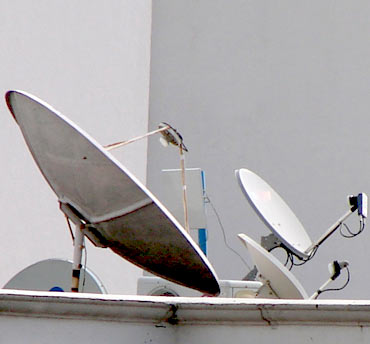
A case study on DTH in the Time of Recession
‘Economic recession’ has been the biggest buzz word in the recent times. But we see
opportunity in the present economic slowdown instead of looking it as a hurdle for a
new venture. As history is the living proof of the same. Google, CNN, GE to name a
few, all started during the worst times and made it big. In present time Pink slips and
job insecurities are covering the globe so this means the talent is much easier to trap,
real estate is cheap. The entertainment industry was the only boom during the 1930’s
recession, as more people turned to television viewing in order to distract them from the
prevalent gloom. This adds more confidence in us to hit the DTH market, with the Govt
pushing Conditional Access System (CAS) hard on cable operators. Here our main
motto is to avail quality entertainment by DTH to a major part of our people in an
affordable price. We want to make avail our service from a millionaire to a common
man in rural areas.
The existing DTH players like BIZ-TV and Infotainment Communication are using
different spectrum on Ku band but offer pretty much the same set of channels(assuming
that every company is doing same in india ) . so we think they are wasting their
money and people money. For an example … ..the Govt. has made it mandatory to
include Doordarshan(DD) channels for service providers like BIZ and its
contemporaries. In the distribution process signal of DD even comes atleast 3 times in
Cband and 2 times in HITS hence totals 11 times, which amounts to wastage of
bandwidth and hence loss of public money. So sharing of the spectrum or beam could
be a solution.
A shared beam can be used by different operators using a standard set top box with
different codes, or ID cards that would identify the operator, recently a similar view
publicly shared by Dr Nair, chairman ISRO. This technology is already in use in UK
and Australia where a single beam is being shared by 5 venders , without affecting the
picture quality. Therefore by sharing of infrastructure and satellite we would limit our
initial expenditure and save public money to a greater extent. The seed money for a
DTH venture is about 400 cr but we can reduce it to 275crore or can even less than this
by sharing infrastructure .Our main plan at present is to seek common agreement on
standardized set top box and infrastructure sharing with any current DTH players. This
would certainly require changes in (addition of more LNBs ) existing customer-dish of
a vender, from which we will share infrastructure , so companies with large no of
customer will hesitate to our proposal. Hence our approach to the present DTH biggies
like BIZ and Info Comm. is completely ruled out. We clearly intent to target the DTH
players who are new in the business or planning to jump into DTH field. They have
few customers and can make the changes needed in their customer’s set top box.
In the present time DVI technology is the best way to receive video into a LCD TV
however no setup box(STB) in the current market offers the same . So in essence the
cheap STBs from genuine DTH service provider make the digital MPEG2/4 signal
convert to analogue to transmit to the TV, where it converts back digital, leading to a
generation loss. Keeping in view the high customer expectations we plan to launch DVI
enabled STBs along with genuine STBs for the common people. We even plan to install
larger dish and automatic level control system in heavy rain fall prone areas to account
for the complains against signal disruption during rain. Other than this We will be
having all the present technology available in market .
“The winning strategy in the DTH space?” We believe cost leadership is not the
answer. Providing cheaper set-top boxes will not do. the ans we think is reach out and
make the service affordable to a very large section of Indians. So we will look at being
present at places where anybody can get us, be it the grocer or paanwala. After some
research on current market we got that a general person is un known about the fact
about DTH and having the wrong idea about the DTH service is that it is very costly.
So to tackle this we will try to captre the whole market through a chain system. We will
open our centers in major parts of country and then quickly walk out through the whole
country. As In the DTH industry, a credible and well managed first-mover service has a
tremendous advantage over others. In India, a first mover may effectively shut out
competition. From our centers we will organize entertainment shows in different places
through that we will give people idea aboutour service , we will be going to schools to
promot our study pakage ,to tv showrooms even to home . The challenge for cable
exists in the rural areas where installation and application are extremely cost
prohibitive, and nearly three quarters of India is designated as rural territory. This has
created an opportunity for DTH, which serves an immediate threat to the high-end cable
networks. we will look at being present at places where anybody can get us, be it the
grocer or paanwala. In a bid totap rural markets, we will look for potential partnerships
with echaupals , post offices and even fertilizer companies.
Our customers will be our sharukh khan, kajol . we will promote our product through
our customer .if he/she get us a new customer, then we will provide them gift in terms of
our service. We will not going to get a celebrity for our advertisement keeping view on
liquidity trap. We will give simple advertisements in, radio, newspaperand privet
channels including DD. Because there are lot of people in India who do not have cable
connection for example in rural and remote areas. Overall we do not think that people use
the product which a celebrity shows, rather they will be motivated by a person who is
satisfied that product.We will have a cost management board that will manage cost of our
infrastructure and prosess looking at this recession .
Service is not yet satisfactory from exiting DTH players, we get this from current market
research. When we talked to people we found that one of the fears is that once they invest
their money in any of these DTH services, they will be forced to be with that service
forever due to the invested money in set top box(STB). So we thought of an idea to give
our customer freedom from the STBs.we will return our STBs and pay the money back
depending on condition of (STBs) if they are not satisfied with our service. We
will create a set of trained professionals in DTH hardware servicing to support our
distribution , post-sales services, installation and activation teams. As we have invested
less in infrastructure so we will be able to give our customers services in very effordable
price it will be starting from 70 /-.There is a huge demand from customer side customized
tv programe, so we will make them avail any program they want . The main thing that
pushes growth is choice. People like options. So we will try to cover evry possible
channel. There is a regular complain of changing of rules and price of service against
existing players so we will assure people of long term policy and will do it too.for
attracting rural people we will avail them specia l regional channel pakage at attractive
price .there will be a commity for checking services given by our centers they will record
the phone talk between customer and employee . and will be donning the guise of
common customer to investicate on regular basic for perfect service
Concluding we have a bunch of ideas and capability to implement them to make our
company the top and we will make that . Thank you
Monday, 2 April 2012
HEDGE FUND MYTHS
As mentioned earlier, the public perceives hedge funds as risky investments
appropriate for thrill-seeking investors. This myth and others persist despite
evidence to the contrary.
Hedge funds are sometimes called absolute return strategies. The
idea of absolute return is in contrast to traditional money management,
where returns are compared to a benchmark of returns on similar assets.
The return on a portfolio of stocks is compared to the S&P 500 or other
index, and a manager is judged not on whether the portfolio was profitable
but rather on how the portfolio return compared to the market return.
In contrast, absolute return strategies can be expected to be
profitable regardless of what happens to any identifiable index. In theory,
the absolute return manager would be judged only on the size and
consistency of returns.
However, most hedge funds retain at least some correlation to stock
and bond returns. Academic studies have shown that the returns on
hedge funds can at least in part be explained by market returns and
other economic factors (credit spreads, volatility, and others). Further,
for hedge funds that follow a popular strategy, it is possible to benchmark
an individual fund’s return against peer fund returns. Finally,
hedge fund indexes now exist that provide reasonable benchmarks for
many hedge funds.
Another hedge fund myth involves assumptions about the life cycle of
hedge funds. Many investors refuse to invest in hedge funds that have less
than, for example, two years of performance in the belief that young funds
are more likely to fail. Other investors seek to invest in young funds because
they believe that smaller, newer hedge funds provide higher returns
than large funds that have been in existence for many years. In addition,
there is a belief that hedge funds don’t tend to survive longer than about
eight years.
In fact, many factors affect the riskiness of hedge funds, the return to
particular funds, and the popularity of an investment style. Certain strategies
such as convertible bond arbitrage remain attractive, despite existing
for decades. The early demise of many new hedge funds can be explained
by weaknesses in investment strategy, failure to establish systems and operating
procedures, or simply bad timing for a fund of a particular style or
strategy.
HEDGE FUND BASICS
Many investors are unfamiliar with the way a hedge fund investment behaves.
In addition to having more investment latitude than traditional investment
managers, a hedge fund manager may charge a variety of fees and
place restrictions on exit from a hedge fund.
Fees
Hedge funds charge a variety of fees. Other types of investment pools, including
mutual funds, private equity funds, and real estate investment
trusts, charge the same types of fees, but the structures of the fees may differ
slightly in the hedge fund industry.
A management fee is charged as a flat percentage of assets under management.
Hedge funds generally charge an annual management fee between
1 and 2 percent. For example, if a fund charges 1.5 percent, it might
assess a monthly fee equal to .125 percent (1.5%/12) based on the value of
the fund’s capital at month-end. This fee is charged regardless of whether
the fund has been profitable. Some funds calculate the management fee
quarterly or less frequently.
An incentive fee is based on the profits made by the hedge fund.
Hedge funds generally charge 15 percent to 25 percent of profit as an incentive
fee. Suppose a fund makes 2 percent or $2 million on assets of
$100 million in a particular month before incentive fees but after the
management fee has been deducted. If the fund collects a 20 percent incentive
fee, the fund will pay $400,000 ($2 million × 20%) to the management
company.
Funds usually charge no incentive fee on profits that offset prior losses.
This is called a high-water mark provision. For example, suppose a hedge
fund started with a net asset value (NAV) of $1,000. Over several months,
the NAV rose to $1,500 and the management company charged incentive
fees based on this return. If the NAV declined to $1,400, the manager
would refund no incentive fees, but the fund would pay no incentive fees
on any returns until the value to investors rose above the previous highwater
mark of $1,500.
Sometimes a fund pays incentive fees on returns above a certain minimum
return. Suppose a $100 million hedge fund pays a 20 percent incentive
fee on returns above the London Interbank Offered Rate (LIBOR). If
LIBOR was 3 percent (annualized to 3%/12 or .25% for a month) and
the fund return was 3.5 percent in one month, the fund would collect an
incentive fee on 3.25 percent; thus, $100 million × (3.5% – .25%) ×
20% = $650,000.
A fund may subject previously paid incentive fees to a look-back provision.
In this case, a manager may be required to refund incentive fees
back to the fund if the fund experiences a loss shortly after an incentive
fee is paid. Look-back provisions are not common, and the specific provisions
can vary from fund to fund. For example, one fund limits the lookback
to three months. Another fund limits the incentive fee look-back to a
calendar quarter.
Hedge fund managers may charge other fees, such as commissions, financing
charges, and ticket charges. The management company may keep
some or all of these fees or may pay out part of these fees as sales incentives
to individuals who market the hedge fund to investors. The existence
and the magnitude of these fees vary from fund to fund. The fund should
disclose these fees to investors, but investors may nevertheless have trouble
determining how much these fees affect the return of the fund.
Thursday, 29 March 2012
DEFINITION OF HEDGE FUND
Definitions of hedge funds run into problems because it is exceedingly difficult
to describe what a hedge fund is without running into trouble with
funds that don’t fit into the rules. There are investment pools that closely
resemble hedge funds but are generally regarded as a different type of investment.
Still other types of investments may contain characteristics that
are generally associated with hedge funds.
As a starting point, begin with a rather typical definition of a hedge
fund:
A hedge fund is a loosely regulated investment company that charges
incentive fees and usually seeks to generate returns that are not highly
correlated to returns on stocks and bonds.
Many traits of hedge funds aren’t useful in defining what is and what is not
a hedge fund.
Regulation and Hedge Funds
Chapter 8 describes the laws and regulations that control hedge funds.
While hedge funds are not unregulated, as is sometimes asserted, they are
more loosely regulated than mutual funds and common trusts run by bank
trust departments. Other types of investments are also loosely regulated,
though, including private equity partnerships, venture capital funds, and
many real estate partnerships.
Investors may feel they will “know it (a hedge fund) when they see it,”
but there are no firm lines separating hedge funds from these other types of
investments. Hedge funds may invest part of their assets in private equity,
venture capital, or real estate.
To further blur the distinction between hedge funds and regulated investment
companies, there is increasing pressure from the Securities and
Exchange Commission (SEC), bank regulators, auditors, and exchanges
for hedge funds to disclose more information and to control permitted
activities. Hedge funds may soon be required to disclose much of the information
that mutual fund companies must report. The SEC has proposed
to require all hedge fund management companies to register as
investment advisers.
Limited Liability
Sometimes, the definition of hedge funds mentions that hedge funds are a
vehicle where investors have no liability for losses beyond their initial investment.
It certainly is true that most hedge funds in the United States are
organized as limited partnerships or limited liability corporations (see
Chapter 5) that protect the investor from liability. However, offshore funds
are usually organized as corporations and, despite this difference, also create
a limited liability investment.
Most other investments are also limited liability investments. Investors
can lose no more than 100 percent of the value of long positions in stocks
and bonds. Mutual funds also protect the investor from losses in excess of
the amount of money invested. While accurate for hedge funds, the characteristic
of limited liability does little to define hedge funds.
Flow-Through Tax Treatment
Hedge funds are not taxed like corporations. Instead, all the income, expenses,
gains, and losses are passed through to investors. This feature does
not define hedge funds because many other investment types are flowthrough
tax entities. Real estate investment trusts (REITs), mutual funds,
venture capital funds, and other private equity funds are regularly constructed
to receive flow-through tax treatment.
Hedge funds organized outside the United States are frequently organized
in locations that have little or no business tax. In these locations,
hedge funds are not organized to get flow-through tax treatment.
Instead, these funds are organized as corporations that do not require
investors to include the annual hedge fund income and expenses on investor
tax returns.
to describe what a hedge fund is without running into trouble with
funds that don’t fit into the rules. There are investment pools that closely
resemble hedge funds but are generally regarded as a different type of investment.
Still other types of investments may contain characteristics that
are generally associated with hedge funds.
As a starting point, begin with a rather typical definition of a hedge
fund:
A hedge fund is a loosely regulated investment company that charges
incentive fees and usually seeks to generate returns that are not highly
correlated to returns on stocks and bonds.
Many traits of hedge funds aren’t useful in defining what is and what is not
a hedge fund.
Regulation and Hedge Funds
Chapter 8 describes the laws and regulations that control hedge funds.
While hedge funds are not unregulated, as is sometimes asserted, they are
more loosely regulated than mutual funds and common trusts run by bank
trust departments. Other types of investments are also loosely regulated,
though, including private equity partnerships, venture capital funds, and
many real estate partnerships.
Investors may feel they will “know it (a hedge fund) when they see it,”
but there are no firm lines separating hedge funds from these other types of
investments. Hedge funds may invest part of their assets in private equity,
venture capital, or real estate.
To further blur the distinction between hedge funds and regulated investment
companies, there is increasing pressure from the Securities and
Exchange Commission (SEC), bank regulators, auditors, and exchanges
for hedge funds to disclose more information and to control permitted
activities. Hedge funds may soon be required to disclose much of the information
that mutual fund companies must report. The SEC has proposed
to require all hedge fund management companies to register as
investment advisers.
Limited Liability
Sometimes, the definition of hedge funds mentions that hedge funds are a
vehicle where investors have no liability for losses beyond their initial investment.
It certainly is true that most hedge funds in the United States are
organized as limited partnerships or limited liability corporations (see
Chapter 5) that protect the investor from liability. However, offshore funds
are usually organized as corporations and, despite this difference, also create
a limited liability investment.
Most other investments are also limited liability investments. Investors
can lose no more than 100 percent of the value of long positions in stocks
and bonds. Mutual funds also protect the investor from losses in excess of
the amount of money invested. While accurate for hedge funds, the characteristic
of limited liability does little to define hedge funds.
Flow-Through Tax Treatment
Hedge funds are not taxed like corporations. Instead, all the income, expenses,
gains, and losses are passed through to investors. This feature does
not define hedge funds because many other investment types are flowthrough
tax entities. Real estate investment trusts (REITs), mutual funds,
venture capital funds, and other private equity funds are regularly constructed
to receive flow-through tax treatment.
Hedge funds organized outside the United States are frequently organized
in locations that have little or no business tax. In these locations,
hedge funds are not organized to get flow-through tax treatment.
Instead, these funds are organized as corporations that do not require
investors to include the annual hedge fund income and expenses on investor
tax returns.
Tuesday, 27 March 2012
“intelligent” investor?
Now let’s answer a vitally important question. What exactly does Graham
mean by an “intelligent” investor? Back in the first edition of this
book, Graham defines the term—and he makes it clear that this kind of
intelligence has nothing to do with IQ or SAT scores. It simply means
being patient, disciplined, and eager to learn; you must also be able to
harness your emotions and think for yourself. This kind of intelligence,
explains Graham, “is a trait more of the character than of the brain.” 2
There’s proof that high IQ and higher education are not enough to
make an investor intelligent. In 1998, Long-Term Capital Management
L.P., a hedge fund run by a battalion of mathematicians, computer
scientists, and two Nobel Prize–winning economists, lost more than
$2 billion in a matter of weeks on a huge bet that the bond market
would return to “normal.” But the bond market kept right on becoming
more and more abnormal—and LTCM had borrowed so much money
that its collapse nearly capsized the global financial system.3
And back in the spring of 1720, Sir Isaac Newton owned shares in
the South Sea Company, the hottest stock in England. Sensing that
the market was getting out of hand, the great physicist muttered that
he “could calculate the motions of the heavenly bodies, but not the
madness of the people.” Newton dumped his South Sea shares, pocketing
a 100% profit totaling £7,000. But just months later, swept up in
the wild enthusiasm of the market, Newton jumped back in at a much
higher price—and lost £20,000 (or more than $3 million in today’s
money). For the rest of his life, he forbade anyone to speak the words
“South Sea” in his presence.
Sir Isaac Newton was one of the most intelligent people who ever
lived, as most of us would define intelligence. But, in Graham’s terms,
Newton was far from an intelligent investor. By letting the roar of the
crowd override his own judgment, the world’s greatest scientist acted
like a fool.
In short, if you’ve failed at investing so far, it’s not because you’re
stupid. It’s because, like Sir Isaac Newton, you haven’t developed the
emotional discipline that successful investing requires. In Chapter 8,
Graham describes how to enhance your intelligence by harnessing
your emotions and refusing to stoop to the market’s level of irrationality.
There you can master his lesson that being an intelligent investor is
more a matter of “character” than “brain.”
Credit Risk Management
Assume a major building
company is asking its house bank for a loan in the size of ten billion
Euro. Somewhere in the bank’s credit department a senior analyst has
the difficult job to decide if the loan will be given to the customer or
if the credit request will be rejected. Let us further assume that the
analyst knows that the bank’s chief credit officer has known the chief
executive officer of the building company for many years, and to make
things even worse, the credit analyst knows from recent default studies
that the building industry is under hard pressure and that the bankinternal
rating1 of this particular building company is just on the way
down to a low subinvestment grade.
What should the analyst do? Well, the most natural answer would
be that the analyst should reject the deal based on the information
she or he has about the company and the current market situation. An
alternative would be to grant the loan to the customer but to insure the
loss potentially arising from the engagement by means of some credit
risk management instrument (e.g., a so-called credit derivative).
Admittedly, we intentionally exaggerated in our description, but situations
like the one just constructed happen from time to time and it
is never easy for a credit officer to make a decision under such difficult
circumstances. A brief look at any typical banking portfolio will be sufficient
to convince people that defaulting obligors belong to the daily
business of banking the same way as credit applications or ATM machines.
Banks therefore started to think about ways of loan insurance
many years ago, and the insurance paradigm will now directly lead us
to the first central building block credit risk management.
Situations as the one described in the introduction suggest the need
of a loss protection in terms of an insurance, as one knows it from car or
health insurances. Moreover, history shows that even good customers
have a potential to default on their financial obligations, such that an
insurance for not only the critical but all loans in the bank’s credit
portfolio makes much sense.
Subscribe to:
Comments (Atom)